
 debbie
The quickest way to confirm whether your LaGuardia flight is delayed is to check your airline’s app or text alerts, which update in real time as gate holds and weather conditions change. Right now, FlightAware reports departure delays at LGA averaging about an hour and a half, though the FAA notes most general departure holds run 15 minutes or less at the gate. The gap between these numbers tells you everything you need to know: delay severity swings wildly depending on your carrier, your destination, and the hour you’re flying.
If you’re standing at the gate watching your boarding time slip or planning a trip through LaGuardia in the coming weeks, you’re dealing with one of the busiest airports in the country wedged into one of the most congested airspaces on earth. That’s not an excuse, just the reality that shapes every departure out of New York. Weather over the Northeast, air traffic control staffing, runway construction, and cascade delays from earlier flights all combine to create the delays that turn a quick hop into an all-day affair.
The FAA explicitly warns that airport status information isn’t flight-specific, so those general delay windows mean very little when you’re trying to decide whether to rush to the airport or grab another coffee. This guide walks you through how to assess your specific situation, what’s likely causing the holdup, and the exact steps to take whether you’re stuck at the gate or trying to get ahead of trouble before you leave home. You’ll also learn which passenger rights kick in when delays stretch past certain thresholds and how to avoid the worst backup windows if you have any control over your travel dates.
Understanding Your LGA Flight Delay
When your phone buzzes with a delay notification or you’re watching the departure board at LaGuardia, understanding exactly what type of delay you’re facing helps you plan your next move. Not all delays are created equal, and knowing the difference between a gate hold and an airborne delay can mean the difference between grabbing lunch and rushing back to your gate.
Let’s break down what’s actually happening with your flight. Current data shows LaGuardia is experiencing departure delays averaging 1 hour 32 minutes, while general delays hover around 15 minutes or less. But what do these different delay types really mean for you?
- Gate Hold
- Your plane is at the gate but hasn’t been cleared to push back yet, typically due to air traffic management or weather. At LGA, these currently last 15 minutes or less.
- Taxi Delay
- Your aircraft has left the gate but is waiting in line on the taxiway before takeoff. These delays also average 15 minutes or less at LaGuardia right now.
- Airborne Delay
- Your incoming plane is in the air but circling or slowing down before landing, currently averaging 15 minutes or less for arrivals at LGA.
- Departure Delay
- The overall time between your scheduled departure and actual wheels-up, which combines gate holds and taxi delays. This is what you see on the departure board.
- Arrival Delay
- The total time your flight lands later than scheduled, affecting connecting passengers and those waiting at the destination airport.
Here’s the tricky part: the information on airport status boards shows general patterns, not your specific flight. The FAA emphasizes that their delay data isn’t flight-specific, so a 15-minute general delay doesn’t guarantee your particular flight will only be 15 minutes late. Your airline holds the real-time details about your exact situation.
If you’re seeing conflicting information, that departure delay average reflects the actual experience many travelers face today, while those shorter general delays represent minimum holds in the system. Your flight could fall anywhere in that range depending on your destination, airline, and departure time. The key is checking your specific flight status directly with your carrier rather than relying solely on airport-wide averages.
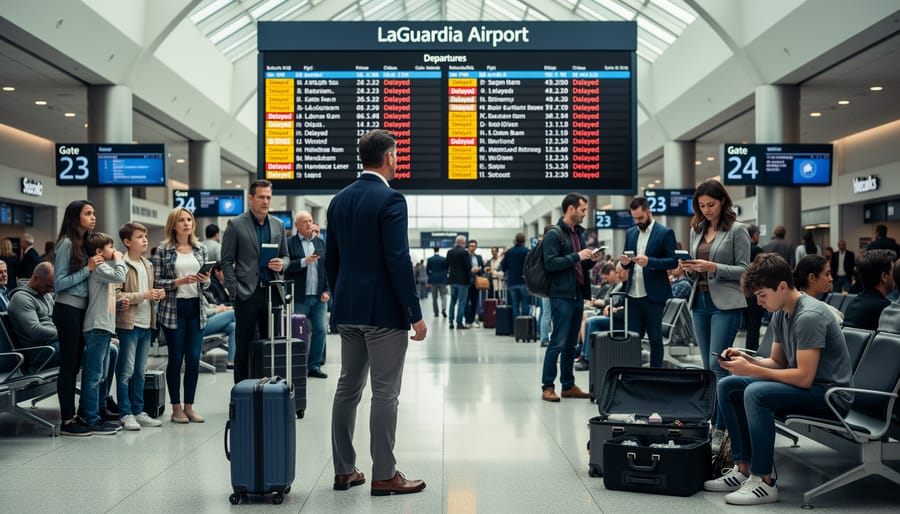
Common Causes Behind LaGuardia Flight Delays
Flight delays at LaGuardia happen for a variety of reasons, and the airport isn’t always quick to share exactly what’s causing your specific holdup. Understanding the general culprits can help you make sense of what’s happening and set realistic expectations.
Weather is the biggest disruptor of air travel in the New York area. Summer thunderstorms can roll in quickly, forcing ground stops and creating ripple effects throughout the day. Winter brings snow and ice that slow everything down, from de-icing planes to clearing runways. Even fog can reduce visibility enough to limit how many planes can safely take off and land.
Air traffic congestion plays a major role too. LaGuardia sits in one of the busiest airspaces in the world, sharing the skies with JFK, Newark, and smaller regional airports. When traffic gets heavy, air traffic control has to space out departures and arrivals more carefully, which creates delays that compound throughout the day.
The airport’s infrastructure also contributes to bottlenecks. While LaGuardia has undergone significant renovations, it still operates with limitations on gate space and taxiway configurations that can slow operations during peak times.
Airline operational issues round out the common causes. These include crew scheduling problems, aircraft maintenance needs, late-arriving incoming flights, and connecting passenger delays. An airline might also consolidate flights or adjust schedules based on demand, which affects timing.
The reality is that most delays result from a combination of these factors rather than a single cause. Airlines and the FAA don’t always disclose the specific reason immediately, so your best bet is staying patient and checking directly with your airline for updates about your particular flight.
How to Check If Your Flight Is Affected

The moment you see that dreaded “delayed” notice, your first move should be getting accurate, real-time information. Here’s exactly how to find out what’s happening with your LGA flight and how long you might be waiting.
Your airline is your primary source. The FAA specifically advises travelers to contact their airline directly to determine if their flight is affected, since airport-wide delay information isn’t flight-specific. Call the customer service number on your booking confirmation or use your airline’s mobile app, which often updates faster than airport displays. I’ve learned this the hard way after relying solely on departure boards that hadn’t refreshed in 20 minutes while my gate had already changed.
- Contact your airline directly through their app, website, or customer service number for flight-specific updates. This is your most reliable source for accurate delay information affecting your particular flight.
- Check airline-specific travel outlook pages for broader disruption patterns. Air Canada’s Daily Travel Outlook, for example, lists affected airports by date, region, and city, showing today’s outlook on possible disruptions to Air Canada flights.
- Review the FAA’s airport status page for LaGuardia to understand overall airport conditions. As of now, general departure delays at LGA are gate hold and taxi delays lasting 15 minutes or less, while arrival delays are airborne delays of 15 minutes or less.
- Monitor FlightAware or similar real-time flight tracking services. FlightAware currently shows LaGuardia experiencing departure delays averaging 1 hour 32 minutes, giving you context for what other travelers are facing.
- Sign up for text or email alerts from your airline if you haven’t already. These notifications often arrive before gate agents make announcements, giving you extra time to adjust plans.
Keep checking multiple sources every 30 minutes or so. Delay estimates change as conditions evolve throughout the day. I always screenshot my airline app updates showing delay times and reasons, which has proven helpful when requesting meal vouchers or rebooking assistance later.
If you’re still at home or your hotel, resist the urge to head to the airport immediately when you see a delay notice. Wait until you have confirmation your flight will actually depart, especially if delays stretch beyond two hours. There’s nothing worse than sitting at a gate for four hours when you could have stayed somewhere comfortable.
What to Do During an LGA Flight Delay
Once your delay is confirmed, stay calm and take a few immediate steps. First, decide whether to stay at your gate or explore the terminal. If your delay is less than an hour, stay close to the gate so you don’t miss boarding updates. For longer delays, you can venture to other terminals, but keep your phone charged and notifications on so you receive any flight changes. LaGuardia has improved significantly with its ongoing renovation, offering plenty of comfortable seating areas, charging stations, and dining options across all terminals.
Next, confirm your rebooking options before the flight gets cancelled. Approach the gate desk or use your airline’s mobile app to see if earlier or alternative flights are available. Sometimes getting proactive about rebooking gives you better options than waiting until a cancellation is announced. If you’re traveling with luggage you’ve already checked, ask about retrieval policies in case you need to switch to a different airline or leave the airport.
Make the wait productive and comfortable by taking advantage of what LaGuardia offers. Terminal B has some great dining spots and shops where you can grab a proper meal rather than vending machine snacks. Pack your travel bag essentials like a portable charger, headphones, and a light sweater since airport temperatures vary. If you’ve got a long wait, this is also a perfect time to prep your skin in the restroom or catch up on work emails in a quiet corner.
Document everything. Take photos of departure boards showing your delay, save email or text notifications from your airline, and keep receipts if you purchase meals or other necessities. This documentation becomes important if you need to file for compensation or reimbursement later, especially for delays that extend overnight.
Your Rights and What Airlines Owe You
Knowing what airlines must provide during delays puts you in control of an otherwise frustrating situation. Unfortunately, U.S. airlines aren’t required to compensate passengers for domestic flight delays, no matter how long you wait. That’s different from Europe’s stronger passenger protections, but you still have rights worth understanding.
For significant delays, most major airlines will offer meal vouchers once delays stretch past three or four hours, though policies vary by carrier. You’ll need to ask at the gate counter; agents won’t automatically announce this. If your delay extends overnight and you’re stranded away from home, airlines typically provide hotel accommodations and ground transportation, but again, this isn’t legally mandated for weather-related or air traffic control delays. Only delays caused by airline issues (maintenance, crew problems, overbooking) trigger these obligations consistently.
When it comes to rebooking, airlines must rebook you on their next available flight at no extra charge if your original flight is significantly delayed or cancelled. You can often request rebooking on a partner airline if that gets you home faster. Don’t hesitate to explore alternate airports like Newark or JFK if LaGuardia options look grim.
Keep all receipts if you purchase meals or accommodations yourself. While airlines aren’t obligated to reimburse weather-related expenses, some will consider reimbursement requests on a case-by-case basis, especially if you’re a frequent flyer or the delay was partially within their control. Document everything and file claims through the airline’s customer service portal within the timeframe specified in their contract of carriage.
Preventing Future Delay Headaches
You can’t eliminate delays entirely, but you can absolutely stack the odds in your favor with a few smart moves before you book.
Start with timing. Morning flights typically face fewer cascading delays because they haven’t inherited problems from earlier departures. If you need to connect through LGA, build in at least a two-hour buffer between flights rather than the minimum connection time. That breathing room has saved me more than once when weather or traffic pushed my arrival back.
When hunting for best flight deals consider airlines with multiple daily flights on your route. If your morning departure gets canceled, rebooking on an afternoon flight with the same carrier is infinitely easier than scrambling to find seats on a competitor.
Travel insurance is worth evaluating, especially for non-refundable trips or tight connections. Look for policies that cover delay-related expenses like meals and hotels, not just cancellations.
Your carry-on strategy matters more than you think. Following effective packing tips means keeping essentials accessible:
- Phone charger and portable battery pack
- Snacks and empty water bottle to fill post-security
- Change of clothes or at minimum fresh underwear
- Medications, contact lens solution, and basic toiletries
- Entertainment that doesn’t depend on WiFi
- Small blanket or wrap that doubles as comfort item and style piece
Invest in quality must-have travel luggage with durable wheels and comfortable straps. You’ll thank yourself when you’re navigating terminals during unexpected delays.
Finally, avoid peak travel days around major holidays when possible. Mid-week flights generally experience fewer delays than Friday evening departures or Sunday returns. A little flexibility in your schedule translates to significantly smoother travel.
At-a-Glance Details
LaGuardia’s delay landscape shifts throughout the day and across seasons, but understanding the basics helps you plan smarter. Here’s what matters most when tracking your LGA flight:
| Delay Type | Current Average | What It Means for You |
|---|---|---|
| Departure Delays | 1 hour 32 minutes | Extended gate hold before takeoff |
| Gate Hold & Taxi | 15 minutes or less | Brief wait, unlikely to miss connections |
| Arrival Delays | 15 minutes or less | Minimal impact on pickup times |
| Check Your Flight | N/A | Contact airline directly for specifics |
These numbers reflect general patterns at LaGuardia, not your specific flight. The FAA’s airport status page shows system-wide trends, but your airline holds the real-time details about your departure. Morning flights typically face fewer delays than afternoon departures when air traffic builds. Winter weather and summer thunderstorms create the most unpredictable conditions, sometimes pushing delays well beyond these averages.
Frequently Asked Questions
Why are flights delayed at LaGuardia?
Flight delays at LGA happen for various reasons including weather conditions, air traffic congestion, and airline operational issues. The specific cause of your delay may not always be immediately disclosed, but checking directly with your airline will provide the most accurate information about what’s affecting your particular flight.
How do I check if my LGA flight is affected?
The FAA recommends checking directly with your airline since airport status information isn’t flight-specific. Airlines like Air Canada provide Daily Travel Outlook pages showing disruptions by date, region, and city. You can also monitor resources like FlightAware for real-time delay information, though your airline remains the most reliable source.
What should I do during an LGA flight delay?
Stay near your gate if the delay is short (under an hour) and keep your boarding pass handy. For longer delays, ask your airline about meal vouchers or rebooking options. Use the time to stay hydrated, charge your devices, and check in periodically with gate agents for updates since delay times can change.
Am I entitled to compensation for my LGA delay?
Compensation depends on the delay cause and length. Airlines aren’t required to compensate for weather or air traffic control delays, but many will provide meal vouchers for extended waits. If your delay qualifies for rebooking or overnight accommodation, ask the airline staff directly about your options.
Current delay patterns at LaGuardia show departure delays averaging 1 hour 32 minutes, while general gate hold and taxi delays typically last 15 minutes or less. The FAA reports that arrival delays are usually airborne delays of 15 minutes or less. These numbers fluctuate throughout the day based on traffic, weather, and operational factors, so your actual experience may differ from these averages.
If you’re planning ahead, knowing these patterns helps you build in buffer time for connections and important events. Remember that delay information changes quickly, so checking multiple times before you head to the airport gives you the most current picture of what to expect.
Flight delays at LaGuardia don’t have to derail your entire journey. Armed with the right knowledge and tools, you’re more than equipped to handle whatever comes your way. Remember: checking your flight status directly with your airline gives you the most accurate information, knowing your passenger rights means you can advocate for yourself confidently, and having a solid backup plan turns frustration into flexibility.
The travelers who navigate delays best aren’t the ones who never encounter them, they’re the ones who stay informed, prepared, and adaptable. You’ve now got the strategies to check real-time status, understand what’s causing holdups, and take action when delays strike. Whether you’re building in extra buffer time for future trips, packing smart essentials for unexpected waits, or simply knowing which questions to ask gate agents, you’re transforming from a passenger at the mercy of circumstances into someone who travels with confidence.
LaGuardia’s delays are real, but they’re also manageable when you approach them with the right mindset and information. You’ve got this.