
 debbie
Booking a flight doesn’t have to drain your wallet or leave you second-guessing every click. The smartest approach combines timing flexibility, price-tracking tools, and a few insider strategies that turn overwhelming airline pricing into opportunities for serious savings. I’ve personally saved hundreds on international trips by mastering the best timing strategy and learning which days airlines typically drop fares.
The reality? Flight prices aren’t random. They follow patterns driven by demand cycles, booking windows, and even the time of day you search. Once you understand how airlines price their seats, you can work the system in your favor. I still remember the thrill of scoring a $300 round-trip to Paris simply because I searched on a Tuesday afternoon and was willing to fly midweek in shoulder season.
These 13 flight tips cut through the noise and focus on what actually moves the needle: when to book, which tools automate the hunt for you, and how small adjustments in your search behavior unlock better deals. Whether you’re planning a girls’ trip to Tulum or finally taking that solo adventure through Southeast Asia, these strategies will help you fly smarter and save more for the experiences that matter once you land.
How We Chose These Flight Booking Strategies
We didn’t just pull these flight booking tips from thin air. Every strategy in this guide has been tested by our editorial team during real trips, from last-minute weekend getaways to carefully planned fashion week adventures in Paris and Milan. We’ve compared prices, experimented with different booking methods, and learned what actually works when you’re trying to stretch your travel budget without sacrificing convenience.
Our selection criteria focused on practicality above all else. We wanted tips that work for both the spontaneous traveler booking a quick beach escape and the planner mapping out a summer of city breaks. Each method needed to deliver tangible savings or reduce booking stress, and it had to be something you could implement without a degree in airline pricing algorithms. If a strategy felt too complicated or only worked in super-specific scenarios, we left it out. What made the cut are the techniques we genuinely use ourselves, the ones we text our friends about when they’re booking their next trip.
1. Book on Tuesday Afternoons for Better Deals

There’s something almost magical about Tuesday afternoons when it comes to flight shopping. Airlines typically release their fare sales late Monday or early Tuesday, and competitors scramble to match prices by Tuesday afternoon. This creates a sweet spot window where you’ll find some of the best deals of the week.
I discovered this firsthand when planning a spontaneous trip to Paris last spring. I’d been casually browsing flights on Sunday evening and nearly had a heart attack at the prices, over $900 roundtrip. But I waited until Tuesday around 2 PM to check again, and boom: the exact same flights dropped to $620. That $280 difference basically paid for my entire Parmesan wardrobe refresh at the vintage boutiques in Le Marais.
Here’s my strategy: block out 30 minutes on your Tuesday afternoon calendar specifically for flight shopping. Make it part of your routine, grab a coffee, and browse without the pressure of booking immediately. Compare a few dates around your preferred travel window since airlines adjust entire fare calendars during these sales.
Does this work every single time? No. But it works often enough that I never book flights on weekends anymore unless it’s an absolute emergency or I’ve spotted an incredible flash sale.
2. Use Incognito Mode to Avoid Price Hikes
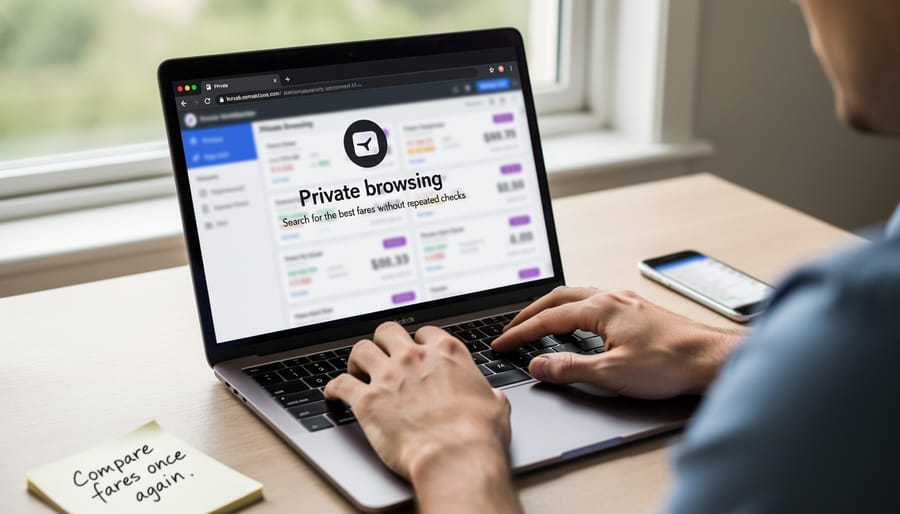
You’ve probably heard the rumor that airlines spy on your searches and jack up prices the second time you look at a flight. While the extent of dynamic pricing based on browsing history is debated, there’s enough truth to it that using incognito mode has become my non-negotiable flight shopping habit.
Here’s what’s happening: Cookies stored in your browser can track which routes you’re searching and how often you’re checking them. Whether airlines use this to increase prices or simply to prioritize certain results, why take the chance? Opening a private browsing window takes two seconds and gives you peace of mind that you’re seeing the cleanest possible prices.
To search incognito, press Ctrl+Shift+N in Chrome or Command+Shift+N on Mac. In Safari, it’s Command+Shift+N for a private window. I also clear my cookies between serious flight shopping sessions, especially when I’m comparing the same route across multiple days.
This tiny tech trick helped me score a flight to Lisbon for $200 less than the price I’d seen during my initial browsing session that morning. Those savings went straight into my travel wardrobe fund.
3. Set Up Price Alerts Instead of Obsessively Checking
I’ll admit it, I used to refresh flight prices three times a day like I was checking Instagram. It was exhausting, and honestly? I’m pretty sure I talked myself into booking at higher prices just to end the mental torture. Then a friend introduced me to price alerts, and it changed everything.
Instead of actively hunting for deals, you let the tools do the watching. Google Flights, Hopper, and Kayak all offer free price tracking. You enter your route and dates (or even flexible date ranges), and they’ll email or push-notify you when fares drop. I set up alerts for a summer trip to Santorini and went about my life. Two weeks later, my phone buzzed with a €200 price drop. Booked it immediately, then treated myself to a new swimsuit with the savings.
The mental relief is as valuable as the money saved. You’re not second-guessing yourself or spiraling into “what if it drops tomorrow?” anxiety. The algorithm watches while you focus on the fun parts of trip planning, like curating outfits for cobblestone streets. Scott’s Cheap Flights (now Going) and Secret Flying are brilliant for spontaneous travelers who can be flexible about destinations. I’ve discovered entire trips I hadn’t considered because an alert popped up with a shockingly good deal to somewhere I’d never thought to visit.
4. Consider Nearby Airports for Hidden Savings
I’ll never forget the time I saved $300 on a flight to London just by switching from Heathrow to Gatwick. That price difference paid for my entire week’s worth of Tube tickets and a gorgeous vintage blazer from Portobello Market.
Here’s the thing: major cities often have multiple airports, and airlines price them differently based on demand and competition. In New York, flying into Newark instead of JFK can sometimes save you over $200. The same goes for London (Gatwick, Stansted, or Luton versus Heathrow), Paris (Beauvais or Orly versus Charles de Gaulle), and dozens of other destinations.
Yes, you might need to factor in an extra train ride or shuttle, but do the math. If your flight is $250 cheaper and the train costs $30, you’re still pocketing $220. That’s money for experiences, shopping, or upgrading your accommodation.
Search for your destination city rather than a specific airport code when using flight comparison sites. Most platforms will show you all nearby options. Check the airport’s website for public transport links before booking. Some smaller airports are incredibly well-connected by train or bus, making them just as convenient as the main hub.
This flexibility mindset extends your budget while opening up travel possibilities you might have otherwise dismissed as too expensive.
5. Book Connecting Flights Separately for Budget Routes
Here’s a money-saving strategy that sounds counterintuitive but can slash your flight costs: instead of booking a single ticket from Point A to Point C through Point B, consider booking two separate one-way flights. I discovered this trick when planning a trip from Toronto to Bali, booking Toronto to Singapore on a budget carrier, then Singapore to Bali separately saved me $400 compared to a single through-ticket.
Budget airlines like Spirit, Frontier, or European carriers like Ryanair thrive on this model, offering rock-bottom fares for individual legs. The savings can fund an entire 2-week capsule wardrobe or help you pack a month-long adventure without breaking the bank.
The catch? You’re responsible if the first flight delays and you miss your connection, no airline protection here. Build in at least four hours between flights, preferably overnight if you can swing it. Also, you’ll need to handle baggage separately for each ticket, meaning potential extra fees and the hassle of rechecking bags. Pack carry-on only when possible to sidestep this entirely.
This works brilliantly for flexible travelers willing to accept a bit more complexity for serious savings.
6. Travel Light to Skip Baggage Fees
Baggage fees can easily add $60-120 to your flight cost, but here’s the secret: you probably don’t need as much as you think. I learned this the hard way before a week-long trip to Italy when I decided to challenge myself to pack only a carry-on. Spoiler alert, I wore some amazing outfits, didn’t feel deprived, and had that extra cash for gelato and a gorgeous leather bag in Florence.
The key is building a capsule wardrobe around versatile pieces that mix and match effortlessly. Start with a cohesive color palette (I swear by black, white, and one accent color like burgundy or olive) so everything coordinates. That striped tee works with your jeans, your midi skirt, and those linen shorts. The trick is choosing pieces that transition from day to evening with just a quick accessory swap.
Your carry-on packing essentials should include:
- Neutral color palette that all coordinates together
- Two pairs of versatile shoes maximum (comfortable walking shoes and dressy sandals or booties)
- Travel-sized beauty products or solid alternatives like shampoo bars
- Wrinkle-resistant fabrics like jersey, merino wool, and technical blends
Multi-purpose pieces are your best friend. A lightweight scarf becomes a beach cover-up, airplane blanket, or chic evening wrap. A slip dress works solo for dinner or layered under a denim jacket for sightseeing. Rolling your clothes instead of folding saves space and minimizes wrinkles, and packing cubes keep everything organized so you’re not frantically digging through your bag at airport security.
The satisfaction of breezing past the check-in counter while everyone else waits in the baggage line? Absolutely priceless.
7. Sign Up for Airline Loyalty Programs (Even If You Fly Once a Year)
I’ll admit I used to think frequent flyer programs were only for business travelers who rack up miles every week. Then a friend convinced me to sign up before a single trip to Miami, and I realized I’d been leaving perks on the table for years.
Here’s the thing: airline loyalty programs are completely free to join, and you start earning benefits immediately. Even if you only fly once or twice a year, those miles add up over time toward free flights, upgrades, or even just waiving that annoying seat selection fee. I’ve used accumulated points to book flights to Copenhagen and Amsterdam without paying a cent.
The immediate perks matter too. Many programs give members priority boarding lanes, which means you’ll actually have overhead bin space for your carefully packed carry-on. You might get free seat selection instead of being stuck in a middle seat at the back. Some airlines offer exclusive sales to members before releasing deals to the general public.
The signup process takes maybe five minutes. Create an account, save your membership number in your phone, and enter it every single time you book. Download the airline’s app to track your balance and access mobile boarding passes. Start with the carriers you fly most often, then expand to their partner airlines within the same alliance.
8. Book the First Flight of the Day to Avoid Delays
I’ll be the first to admit: I am not a morning person. The idea of a 6 a.m. flight makes me want to cry into my cold brew. But here’s the thing I’ve learned after one too many missed connections and gate-sprinting disasters, early flights are your secret weapon against travel chaos.
Airlines typically start each day with fresh crews and on-time aircraft. That first departure hasn’t been delayed by weather in another city, mechanical issues from a previous flight, or the domino effect of late arrivals. As the day progresses, delays compound. Your 3 p.m. flight might be using a plane that was supposed to arrive at noon but got held up in Chicago, which was delayed because of issues in Denver, and so on.
I’ve tested this strategy on routes from New York to LA, and the difference is remarkable. My 6:30 a.m. departures leave on time about 85% of the time, while afternoon flights on the same route? Maybe 60%.
If you’re dreading the early alarm, pack your outfit the night before, set your coffee maker on a timer, and remind yourself that an on-time arrival means more vacation hours. You can sleep on the plane, and you’ll actually arrive when you’re supposed to, ready to explore rather than stress at the airport.
9. Use Credit Card Points Strategically

I’ll be honest, I used to think travel credit cards were only for business travelers or people who fly constantly. Then a friend showed me her free flight to Barcelona, and I realized I’d been leaving money on the table.
Here’s the thing: you don’t need to be a points expert to make this work. Start by putting your regular expenses, groceries, gas, monthly subscriptions, on a travel rewards card instead of your debit card. You’re spending that money anyway, so why not earn points? I racked up enough for a round-trip to Miami just from my normal shopping over six months.
The real trick is redeeming those points smartly. Look for cards that offer bonus categories (like 3x points on dining or travel) and pay attention to transfer partners. Sometimes transferring points to an airline program gets you better value than booking through the credit card portal. But if math isn’t your thing, the portal works perfectly fine, I’ve scored flights at 1.5 cents per point, which beats paying cash.
One rule: pay off the balance monthly. Interest charges will erase any points benefits faster than you can say “flight sale.” Treat it like a debit card that just happens to fund your next adventure.
10. Compare Prices Across Multiple Booking Platforms
I used to be a one-site shopper until I missed out on a $200 price difference for a flight to Barcelona. Now I always check at least three platforms before hitting “book,” and it’s saved me enough to splurge on a leather jacket at El Born market.
Start with meta-search engines like Google Flights or Skyscanner to get a bird’s-eye view of prices across airlines. These sites don’t actually sell tickets, they’re comparison tools that show you what’s available. Once you spot a good deal, check the airline’s website directly. Sometimes you’ll find the same price, and booking direct gives you more flexibility if plans change. Airlines are typically more helpful with rebooking or refunds when you’ve purchased through them rather than a third party.
That said, online travel agencies like Expedia or occasionally offer exclusive deals or package discounts that airlines don’t match. I’ve scored genuinely cheaper fares on OTAs for less-traveled routes.
The winning strategy? Cross-reference prices. If an OTA is significantly cheaper and you’re confident about your travel dates, go for it. If prices are within $20-30 and you value flexibility, book directly with the airline. Your wallet and your stress levels will thank you.
11. Be Flexible with Your Travel Dates
I’ll be honest, I used to plan trips around my work schedule, booking flights that fit my calendar perfectly, and then wonder why I was always paying premium prices. The game-changer came when I flipped that approach: I started checking what flights actually cost across a range of dates, then requested those specific days off work. That simple shift saved me over $400 on a trip to Barcelona.
Most booking platforms have a flexible date calendar view that shows prices across an entire month. On Kayak, it’s the “Explore” tool; on Google Flights, it’s the date grid. Spend five minutes clicking through, and you’ll quickly spot patterns, leaving Thursday instead of Friday can drop the price by $150, or returning on a Tuesday versus Sunday might save another hundred. Those savings add up to an extra night in a boutique hotel or funds for that capsule wardrobe buying guide you’ve been eyeing.
If you’re tied to specific weeks because of limited vacation time, try this: search for flights departing one or two days earlier or later than your ideal date. Even shifting by 24 hours can unlock better fares. I’ve found that traveling mid-week not only saves money but also means quieter airports and less stressful security lines, a win for anyone who values a calm start to their adventure.
12. Read the Fine Print Before Clicking ‘Book’
I learned this lesson the hard way on a flight to Barcelona. I clicked “book” without reading the fine print and discovered my basic economy ticket didn’t include seat selection (hello, middle seat between two strangers for eight hours) or a carry-on bag. The extra fees I paid at the airport basically erased my “savings.”
Now I treat that checkout page like a fashion label’s care instructions, worth reading before committing. Check cancellation policies first. Some tickets offer free changes within 24 hours, while others lock you in completely. Look at change fees if your travel dates might shift. Understand what basic economy actually means: often it’s last to board, no overhead bin space, and zero flexibility.
Read baggage policies carefully. That $89 fare can become $150 after checked bag fees. Know if meals are included on international flights. Some carriers charge for everything, even water.
I also check if the booking is refundable to your original payment method or just as airline credit. That distinction matters when plans genuinely fall through and you’d rather pair with a spa day than rebook immediately.
Taking three minutes to read the details saves hours of frustration later. Your future self will thank you.
13. Book Accommodations and Flights Together for Package Deals

I learned about package deals the hard way during a last-minute girls’ trip to Miami. After spending hours comparing flights and hotels separately, I stumbled on a bundle through Expedia that saved us $300 total. Sometimes the easiest path really is the cheapest.
Package deals shine brightest for all-inclusive beach resorts and quick city breaks where you want simplicity. Booking sites negotiate bulk rates with hotels and airlines, then pass some savings to you. I’ve found the best deals when booking popular vacation spots like Cancun, Las Vegas, or Orlando, destinations where tourism packages are standard.
That said, bundles aren’t always winners. If you’re chasing a specific boutique hotel or have airline loyalty status, booking separately often makes more sense. You lose flexibility with packages too. Changing your flight might force you to rebook the hotel, and vice versa.
My rule: check package prices first for beach vacations and weekend getaways to major cities. For longer trips or when you’ve found an amazing hotel deal independently, skip the bundle. The time you save researching might be worth a small price difference anyway, leaving you more energy for planning cute outfits and Instagram-worthy itineraries.
Your Flight Booking Toolkit for Stress-Free Travel
There you have it, 13 flight booking strategies that’ll put more money in your pocket and give you back precious time and sanity. I’ve used every single one of these tips to fund spontaneous weekend getaways, score business class upgrades with points, and yes, splurge on that perfect linen dress in Santorini because I saved $300 on my flight.
The beauty of smart flight booking isn’t just about being frugal. It’s about being intentional with your travel budget so you can say yes to the experiences that truly matter, whether that’s staying an extra night in Paris, booking the hotel with the rooftop pool, or not stressing over every gelato purchase in Rome.
Start with two or three tips from this list that feel most doable right now. Set up those price alerts, try booking on a Tuesday afternoon, or finally sign up for that airline loyalty program. Small changes add up to significant savings, and before you know it, you’ll be the friend everyone asks for flight booking advice. Now go plan that trip you’ve been dreaming about, your next adventure is waiting.
Common Questions About Booking Flights
Booking flights can feel overwhelming, and you’re definitely not alone if you’ve found yourself staring at search results wondering if you’re making the right call. These are the questions that pop up most often when we’re chatting with readers about flight booking, so let’s tackle them with some straight-up answers that’ll help you book with confidence.
How far in advance should I book my flight?
For domestic flights, aim for 1-3 months ahead, while international trips typically offer the best prices around 2-6 months out. That said, flexibility matters more than following rigid rules, if you spot a great deal earlier or later, grab it.
Are last-minute flights ever actually cheaper?
Occasionally, yes, but it’s risky to count on it. Airlines sometimes drop prices to fill empty seats within two weeks of departure, but you’re more likely to pay a premium for procrastinating. If you can be spontaneous and flexible about destinations, last-minute deals can work in your favor.
Is travel insurance really worth the cost?
For international trips or expensive flights, absolutely. It protects you against unexpected cancellations, medical emergencies, and lost baggage. For quick domestic weekenders, you can probably skip it if you’re comfortable with the risk.
What’s genuinely the best day to fly?
Tuesdays and Wednesdays are typically cheapest because fewer people travel mid-week. Sundays and Fridays are usually the priciest since everyone wants those convenient travel days.
Should I always book directly with the airline?
Booking direct gives you easier customer service and more flexibility with changes, but third-party sites sometimes offer genuinely better prices. Compare both options and weigh convenience against savings based on your trip’s importance.
The truth is, there’s no single perfect answer that works for everyone. Your ideal booking strategy depends on your schedule, budget, and how much uncertainty you can handle. Trust your gut, use these tips as guidelines rather than gospel, and remember that the goal is getting you to your destination without draining your bank account or your peace of mind.