 debbie
Packing for a month-long trip requires just one carry-on and a personal item when you build a 15-piece capsule wardrobe that mixes and matches into 30+ outfits. This strategic approach keeps you mobile, saves baggage fees, and ensures you always have something fresh to wear without the stress of lugging oversized suitcases through cobblestone streets or cramped train aisles.
I learned this lesson the hard way during my first extended trip to Europe in 2024. I dragged a massive checked bag up four flights of Parisian stairs (no elevator, naturally) and spent the entire month wearing the same five pieces while the rest sat untouched. The frustration of overpacking taught me that longer trips actually require less stuff, not more.
The secret lies in choosing versatile, mix-and-match pieces that work together seamlessly. Think neutral basics that transition from day to night, pieces that layer for different climates, and fabrics that resist wrinkles and wash easily in a sink. Similar to how you’d plan a 2-week fall capsule extending your wardrobe for a full month simply means being smarter about what makes the cut.
The beauty of this method? You’ll actually spend less money on your trip because you won’t pay for checked bags, and you’ll have more freedom to hop on last-minute flights or trains without worrying about baggage logistics. Plus, with everything fitting in overhead compartments, you’ll never watch anxiously at a carousel wondering if your suitcase made the connection.
This guide walks you through exactly what to pack, how many of each item you need, and the step-by-step process to build your perfect month-long travel wardrobe without the guesswork or anxiety.
What You’ll Need: Essential Gear and Clothing for Your Month-Long Journey
Luggage and Packing Tools
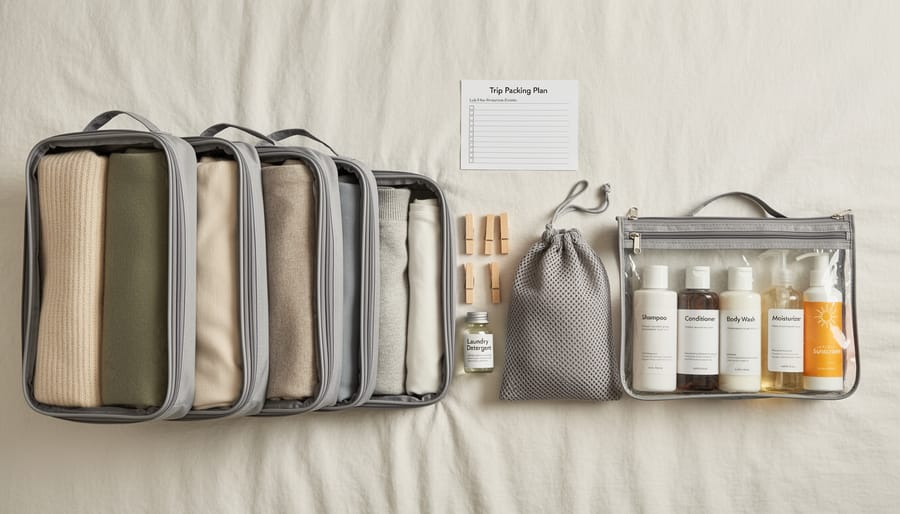
I’ll be honest, I used to think a huge checked bag was necessary for any trip longer than two weeks. Then I spent a month dragging 50 pounds of “options” through European train stations and changed my tune fast. Your luggage choice sets the tone for your entire month, so choose wisely.
For a month-long trip using the capsule method, a carry-on size bag (22″ spinner or backpack) actually works perfectly. Yes, really. If you plan to do laundry once a week (which you absolutely should), you don’t need 30 outfits. A carry-on saves you baggage fees, speeds up airport transitions, and forces you to pack only what truly works together. If you’re nervous about going that small, a 24-26″ checked bag gives you breathing room without tempting you to overpack.
Packing cubes are non-negotiable for month-long organization. Get a set of 3-4 in different sizes, one for tops, one for bottoms, one for undergarments and swimwear. They compress your clothes slightly and keep everything findable when you’re living out of your bag for weeks. I learned this after spending 20 minutes hunting for a specific shirt in a jumbled suitcase in Bangkok.
Add one or two compression bags for bulky items like jackets or sweaters. These aren’t for everything (your clothes will wrinkle), but they’re lifesavers for those few pieces that eat up space.
Finally, pack a small laundry kit: travel detergent packets, a sink stopper, and a portable clothesline or drying rack. You’ll use this weekly, guaranteed.
The Capsule Foundation: Your Color Palette
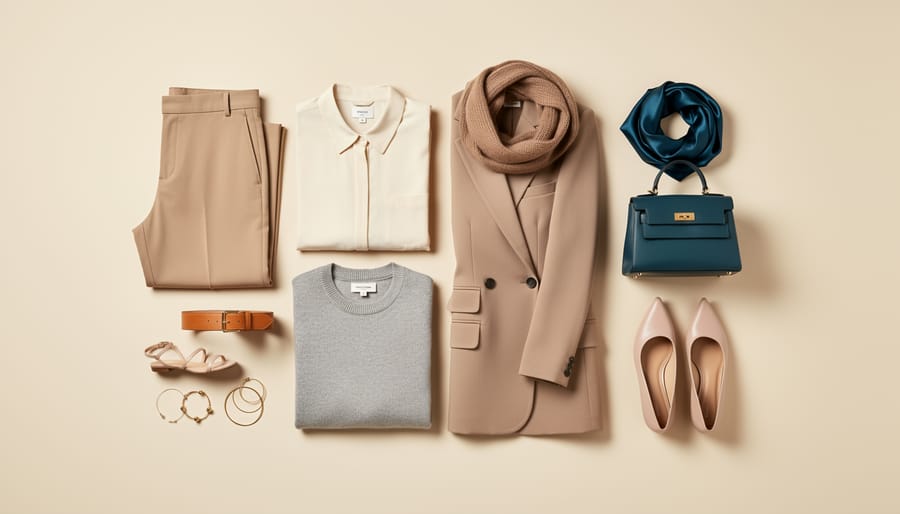
Your color palette is the invisible framework that makes packing for a month-long trip exponentially easier. Instead of matching 20 individual outfits, you’re choosing colors that all work together, meaning any top pairs with any bottom, and your accessories complement everything.
Start with 2-3 neutral base colors. Black, navy, beige, and gray are the workhorses of a travel capsule because they hide wrinkles, don’t show dirt easily (crucial when you’re wearing pieces multiple times), and transition from day to night. I learned this the hard way on my first month-long trip when I packed bright white pants, they lasted exactly three days before looking dingy.
Choose neutrals that flatter your skin tone. If you look washed out in black, swap it for charcoal or chocolate brown. Warm-toned? Camel and olive might work better than stark gray. The goal is colors you feel confident wearing on repeat.
Then add 1-2 accent colors to keep things interesting. This is where your destination matters. Heading somewhere tropical? A coral or turquoise accent feels right and photographs beautifully. Europe in fall? Burgundy or mustard adds richness without clashing with your neutrals.
Here are some color combinations that travel well and hide stains:
- Navy + gray + white, with coral or teal accents
- Black + beige + cream, with burgundy or forest green accents
- Charcoal + olive + tan, with rust or gold accents
- Camel + navy + ivory, with blush or terracotta accents
Test your palette by laying everything out before you pack. If a piece doesn’t match at least three other items, it’s not pulling its weight for a month away.
Before You Start Packing: Important Warnings and Considerations
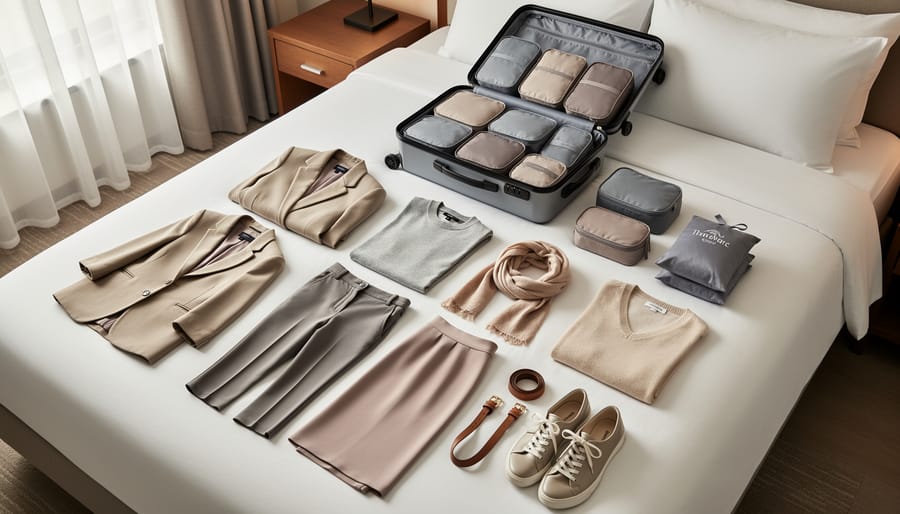
Before you dive into choosing what to pack for a month long trip, take a step back and do your homework. I learned this the hard way during my first extended trip to Southeast Asia when I packed a suitcase full of jeans and boots, only to arrive in 95-degree humidity where everyone wore lightweight cotton and sandals. Research your destination’s climate not just for one week, but for the entire duration of your stay. A month-long trip in spring could mean winter temperatures at the start and summer heat at the end, especially if you’re traveling across regions or hemispheres.
Cultural dress codes deserve serious consideration, particularly if you’re visiting religious sites, conservative countries, or attending any formal events. Some destinations require covered shoulders and knees for temple entry, while others have expectations around beachwear or evening attire. Check these requirements before you build your capsule, they’ll directly impact which pieces make the cut. If you’re planning a capsule for Europe you might need dressier options than a beach-focused trip to Thailand.
Now for the biggest packing mistakes I see travelers make. First, resist the urge to pack for every possible scenario, you don’t need hiking boots, heels, and running shoes “just in case.” Second, leave the statement pieces at home. That gorgeous printed maxi dress or sequined top might be Instagram-worthy, but if it only works with one outfit, it’s dead weight in your bag. Third, seriously consider shoe weight. Your footwear will be the heaviest items in your luggage, and three pairs of shoes can easily add 5-8 pounds. Finally, confirm laundry access at your accommodations or nearby laundromats. Knowing you can wash clothes every 7-10 days changes everything about how much you actually need to pack.
Step-by-Step: Building Your Month-Long Capsule Wardrobe
Step 1: Choose Your Bottoms (4-5 Pieces)
Start with bottoms because they’re the heaviest items you’ll pack and they determine everything else you bring. I learned this the hard way dragging three pairs of jeans through Italy, never again.
Pack two pairs of pants: one dark-wash jeans (wear these on the plane to save luggage space) and one dressy neutral pair in black, navy, or tan that works for nicer dinners or meetings. Add one or two shorts or skirts depending on your destination’s climate. Finally, include one comfortable active pair, leggings, joggers, or hiking pants if your trip involves outdoor activities.
Choose quick-dry, wrinkle-resistant fabrics whenever possible. You’ll be washing these pieces in hostel sinks or laundromats throughout your month away, so cotton blends or synthetic materials beat 100% cotton every time. Each bottom should pair with at least four of your tops, which is where the women’s capsule guide principles really shine, everything works together, nothing sits unused in your bag.
Stick to your chosen color palette for all bottoms. This discipline makes getting dressed effortless when you’re jet-lagged or rushing to catch a train.
Step 2: Select Your Tops (6-7 Pieces)
With your bottoms locked in, choosing the right tops becomes easy because they just need to pair with everything you already selected. Aim for 6-7 tops total, but quality trumps quantity here.
Start with 3-4 basic tees or tanks in your neutral color palette. I pack two crew-neck tees and two tank tops, all in black, white, or gray, because they work under jackets, with jeans for sightseeing, or tucked into a skirt for dinner. The key is choosing breathable fabrics like cotton blends or merino wool that you can wear multiple times between washes without feeling gross. Trust me, after two weeks in humid Thailand, I learned that synthetic workout tees don’t cut it for daily wear.
Next, add 2 nicer blouses or button-ups that elevate your evening looks. A silk-feel blouse in your accent color and a classic white or chambray shirt give you restaurant-ready outfits when paired with your dressier bottoms. Finally, pack 1 sleeveless option, a linen shell or structured tank, for those sweltering afternoons when even a tee feels like too much fabric.
Each top should work with at least three of your bottoms. That simple rule keeps your capsule functional for the entire month.
Step 3: Add Layering Pieces (2-3 Items)
Layering pieces are your secret weapon for unpredictable temperatures, planes are freezing, restaurants blast AC, and evenings cool down even in warm destinations. I learned this the hard way during a month in Thailand when I froze on overnight buses despite 90-degree daytime heat.
Start with one lightweight cardigan or sweater in a neutral from your color palette. It should be thin enough to tie around your waist or stuff in your day bag. Next, add one structured jacket, either denim or a utility style, that elevates casual outfits for nicer dinners while still pairing with your active wear.
The third piece is a large scarf, which honestly works overtime. I’ve used mine as a plane blanket, beach cover-up, modest shoulder covering for temples, and a pop of color when outfits feel repetitive. Choose a lightweight fabric in your accent color.
Here’s the magic: these three pieces transform your 10-11 other clothing items into 30+ outfit combinations. That cardigan makes every tank top appropriate for air-conditioned museums. The jacket turns shorts into an evening-ready look. You’re not just staying comfortable, you’re multiplying your wardrobe without adding bulk.
Step 4: Include One Dress (Optional but Recommended)
Here’s my take on the dress section: I fought this rule for years, insisting dresses weren’t practical for travel. Then I spent a month in Portugal with one navy midi dress, and it became my most-worn item.
A versatile dress is your secret weapon for a month-long trip because it counts as one item but creates endless outfit combinations. Choose a style in your base color palette, think navy, black, or a neutral tone, that hits somewhere between knee and ankle length. A simple fit-and-flare or shirt dress works wonders because you can wear it alone with sandals for daytime sightseeing, throw your denim jacket over it for cooler evenings, or dress it up with your nicer flats and jewelry for dinner.
The math is simple: one dress worn with different shoes, layers, and accessories equals five completely different looks throughout your month away. Pick a fabric that doesn’t wrinkle easily and can handle both air-conditioned restaurants and humid street markets. I spent about $40 on that Portugal dress at a high-street shop, and it paid for itself in outfit versatility within the first week.
Step 5: Limit Your Shoes (3 Pairs Maximum)
This is genuinely the hardest step, but it’ll save your back and your baggage fees. Shoes are heavy, bulky, and they eat up luggage space faster than anything else in your capsule wardrobe.
Here’s your three-pair maximum: one pair of comfortable walking shoes that you’ll wear on the plane (never pack these, they’re too heavy), one pair of sandals or dressy flats that transition from day to night, and one optional pair of active shoes only if your month includes serious hiking or daily workouts.
I learned this the hard way after lugging four pairs through Italy. Now I swear by white sneakers that go with everything, leather sandals that dress up for dinner, and that’s it. If you’re torn about the third pair, ask yourself: will I actually use these at least once a week? If not, leave them home.
Multi-purpose is key. Look for sandals with arch support that handle cobblestones and restaurants. Choose sneakers in neutral colors that pair with your entire capsule. I’ve found great options at Target and DSW that survive month-long trips without the luxury price tag.
Your feet will thank you when you’re exploring a new city every few days instead of nursing blisters from shoes you wore once.
Step 6: Pack Smart Undergarments and Swimwear
The unsexy truth about month-long packing? Your underwear strategy matters more than your outfit choices. You’ll be doing laundry at least once a week, so pack 5-7 pairs of quick-dry underwear, enough to get through a week plus a backup. I swear by merino wool or synthetic blends that wash in a sink and dry overnight on a hotel towel rack.
For bras, bring 2-3 maximum. One neutral everyday bra, one sports bra that doubles for workouts and casual days, and optionally one nicer bra if you’re packing dressier outfits. The sports bra trick alone saved me so much space during my month in Thailand.
Socks depend on your activities. Warm destinations need 3-4 pairs of ankle socks. Cooler climates or hiking trips require 5-6 pairs of merino wool socks that resist odor between washes.
Here’s the game-changer: pack one swimsuit in a style that works as a bodysuit under jeans or shorts. A black one-piece or sporty bikini top transforms into regular clothing, giving you bonus outfit options without extra weight. I’ve worn my swimsuit as a going-out top more times than I’ll admit, and nobody knew the difference.
Step 7: Finish with Accessories
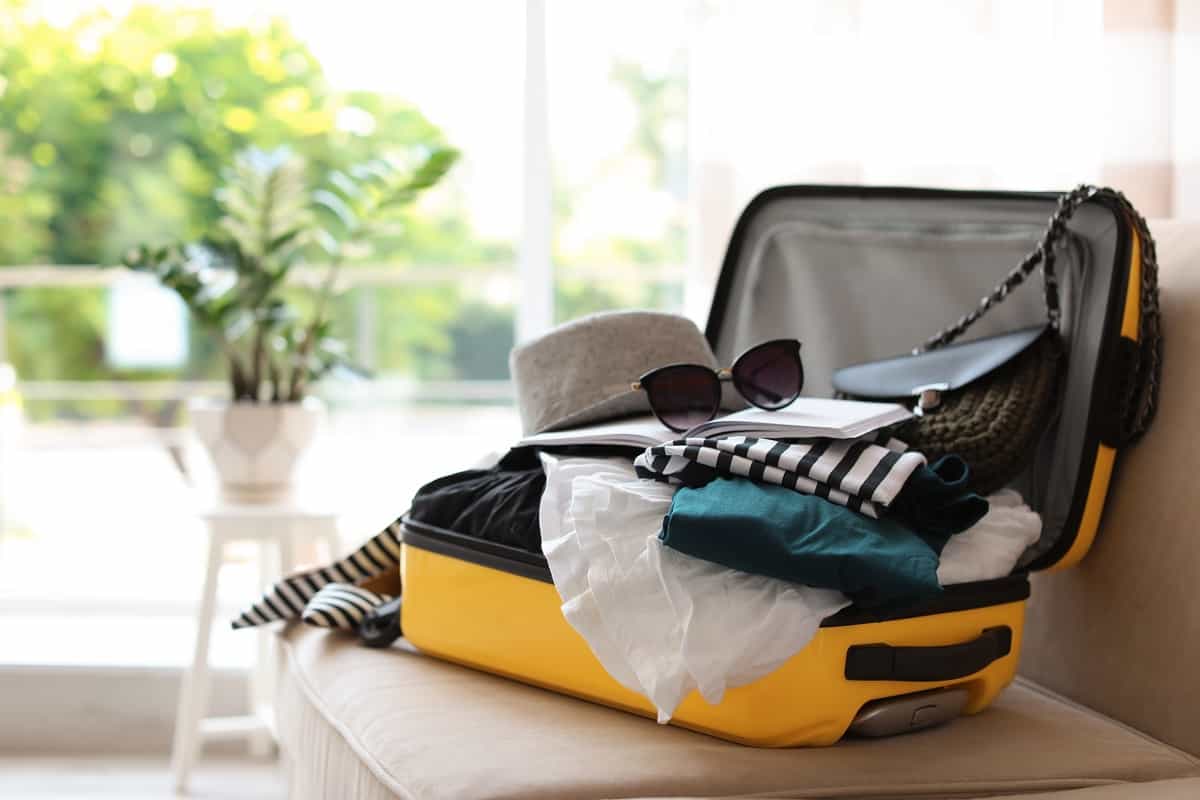
Accessories are where your capsule wardrobe comes to life, but they’re also where overpacking sneaks in if you’re not careful. Stick to the essentials: one crossbody bag for daily adventures (hands-free is non-negotiable for a month of exploration), one pair of sunglasses, a hat for sun protection, and one belt to cinch dresses or change the look of your pants. Add just one or two pieces of jewelry in your accent color, think a statement necklace or simple earrings that work with everything.
Here’s my biggest accessory revelation from a month in Morocco: I packed three scarves, two necklaces, and a stack of bangles, convinced I needed options. I wore the same crossbody bag and sunglasses every single day, and the rest sat untouched. Meanwhile, I fell in love with a handwoven basket bag at a souk in Marrakech and colorful beaded earrings in Essaouira. Now I pack the absolute minimum and leave room in my budget and luggage for local finds that actually mean something. Your accessories should enhance your capsule, not weigh it down.
Testing Your Capsule: How to Verify You’re Ready
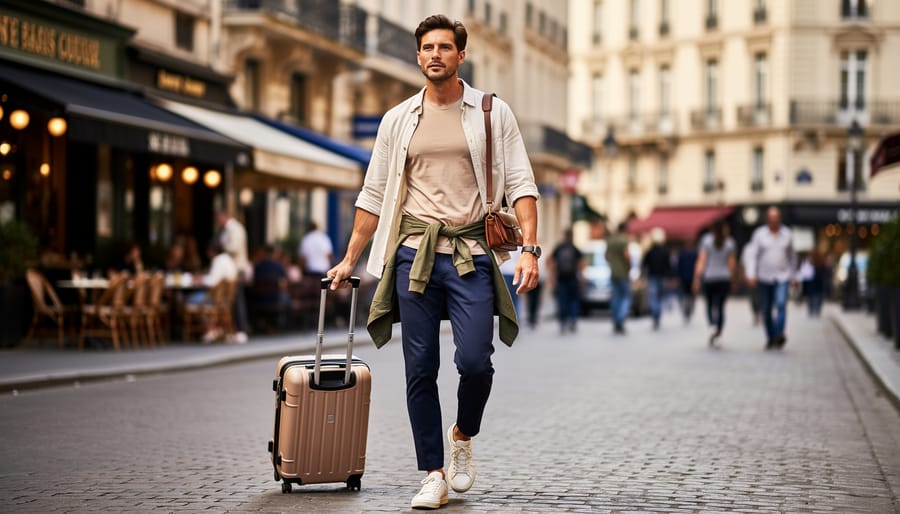
Before you zip that suitcase for your month-long adventure, you need to test whether your capsule wardrobe actually works. I learned this the hard way on a trip to Japan when I realized on day three that half my tops didn’t match my bottoms, a rookie mistake that cost me precious luggage space.
Start with the mix-and-match test. Lay everything out on your bed and challenge yourself to create at least fifteen different outfits. If you can’t hit that number, something’s wrong with your color palette or piece selection. Each bottom should pair with at least four tops, and your layering pieces should work across multiple combinations. This visual exercise reveals the dead weight immediately.
Next comes the re-wear test, which is honestly more psychological than practical. Pick up each item and ask yourself: “Am I comfortable wearing this three times in one week?” For a month-long trip, you’ll definitely repeat outfits. If an item feels too precious or “save for special occasions,” it doesn’t belong in your capsule. Everything should feel like a favorite you’d never overpack again without.
The weight check is non-negotiable. Weigh your packed bag on a luggage scale before you leave home. Most airlines allow 50 pounds for checked bags or around 15-22 pounds for carry-ons. If you’re over, start removing items, usually those “just in case” pieces you added at the last minute.
Finally, do a week-long trial run at home. Wear only items from your capsule for seven days without repeating the exact same outfit twice. This reveals uncomfortable shoes, tops that need constant adjusting, or pieces that just don’t feel like you. Cut anything that fails this real-world test. Your future self, navigating cobblestone streets or rushing through airports, will appreciate the ruthless editing.
What to Do Next: Toiletries, Electronics, and Final Touches
With your capsule wardrobe sorted, it’s time to tackle the practical essentials that’ll keep you comfortable, connected, and prepared throughout your month away.
Start with toiletries. The TSA 3-1-1 liquids limit means travel-size everything if you’re carrying on, but here’s my secret: buy shampoo, conditioner, and body wash at your destination. Most accommodations provide basics anyway, and you’ll save precious luggage space. I pack only what I can’t easily replace: my specific face cleanser, prescription medications, and favorite moisturizer with SPF. Everything else? A drugstore run on day one sorts it out, often for less than you’d spend on travel bottles at home.
For electronics, keep it minimal. Your phone handles most tasks, so you really only need your charger, a universal adapter (crucial for international trips), portable battery pack, and maybe headphones. If you’re bringing a laptop or camera, pack one charging cable per device and store everything in a small electronics pouch so you’re not digging through your bag at airport security.
Create a simple medical kit with basics you might need over a month:
- Pain relievers and any prescription medications in original bottles
- Anti-diarrhea tablets and motion sickness remedies
- Band-aids and blister treatment for all that walking
- Antihistamines for unexpected allergies
- Hand sanitizer and a small first-aid guide
Finally, organize your travel documents in one accessible spot, passport, copies of reservations, travel insurance details, and emergency contacts. I keep physical copies separate from digital backups, just in case my phone dies at the worst possible moment.
These final touches transform your packing from “I think I’m ready” to “I’m definitely ready for anything this month throws at me.”
Common Questions About Packing for a Month
I spent a month in Thailand last year with just 15 pieces of clothing, and the questions I got from fellow travelers were almost always the same. Here’s what actually works when you’re packing light for 30+ days.
What if the weather changes during my month away?
Your layering pieces handle most temperature shifts, a cardigan and jacket can adapt a summer outfit for cooler days. Check the historical weather for your destinations and pack one versatile layer that covers the coolest temperature you’ll likely encounter.
How often will I need to do laundry?
Plan on washing clothes every 5-7 days with a capsule wardrobe. Most accommodations have laundry facilities or affordable laundry services, and quick-dry fabrics mean you can hand-wash items in your sink overnight if needed.
Can I really survive on so few clothes for a month?
Absolutely, 15-20 versatile pieces create 30+ outfit combinations when they mix and match properly. You’ll actually repeat outfits less than you think because you’re constantly pairing pieces in new ways.
What if I want to buy things while traveling?
That’s the beauty of packing light, you leave room in your luggage for purchases and souvenirs. Some travelers intentionally pack a bit less, planning to pick up a few local pieces that become part of their capsule.
How do I pack for both beach and city destinations?
Choose pieces that transition between settings: a sundress works for sightseeing and beach cover-up, shorts pair with tees for the beach and blouses for dinner, sandals go everywhere. Your swimsuit and one pair of flip-flops handle beach-specific needs without dedicating your whole suitcase to resort wear.
Can this capsule wardrobe method work for business travel?
Yes, with slight adjustments, swap casual tees for professional tops, include dress pants instead of shorts, and pack one blazer as your key layering piece. The mixing and matching principle stays the same, just with office-appropriate items.
The biggest shift in mindset is realizing that nobody on your month-long trip is tracking what you wore three days ago. You’re meeting new people constantly, staying in different cities, and honestly, you’ll care more about comfort and versatility than variety. If you want detailed recommendations on building your specific capsule based on destination type, check out our buying guide for European travel, the principles apply to any extended trip.
One practical tip I learned the hard way: take photos of your favorite outfit combinations before you leave home. When you’re tired after a long travel day, having a quick reference for what works together saves mental energy and prevents that “I have nothing to wear” feeling even with fewer pieces.
Packing for a month-long trip sounds overwhelming until you realize it’s not about bringing more, it’s about bringing better. The capsule wardrobe method proves you don’t need a massive suitcase or checked baggage fees to stay comfortable and stylish for 30 days. You just need 15-20 versatile pieces that work together, a strategic color palette, and the confidence to leave half your closet at home.
I’ll never forget dragging a 50-pound suitcase through cobblestone streets in Prague, convinced I needed options for every possible scenario. Fast forward to my month backpacking through Vietnam and Thailand with just a carry-on, and I felt like I’d cracked some secret travel code. Fewer clothes meant less stress, more mobility, and actual room in my bag for the gorgeous silk scarf I found in Hoi An and the handmade earrings from a Bangkok night market.
Traveling light for a month isn’t limiting. It’s liberating. You’ll spend less time deciding what to wear, less money on laundry, and less energy hauling stuff around. Plus, you’ll leave space for the unexpected finds and spontaneous adventures that make travel magical.
Try this capsule approach on your next extended trip. Start with the steps we covered, then adjust based on your personal style and destination. You’ll discover what works for you, and you might never overpack again.